GLP-1 Medications: Benefits, Risks, and How to Protect Your Muscle
Disclaimer: This article reflects my observations and coaching perspective as a personal trainer and nutrition coach. It is for educational purposes only and is not medical advice. Medication decisions should always be made in consultation with a licensed physician or qualified healthcare provider.
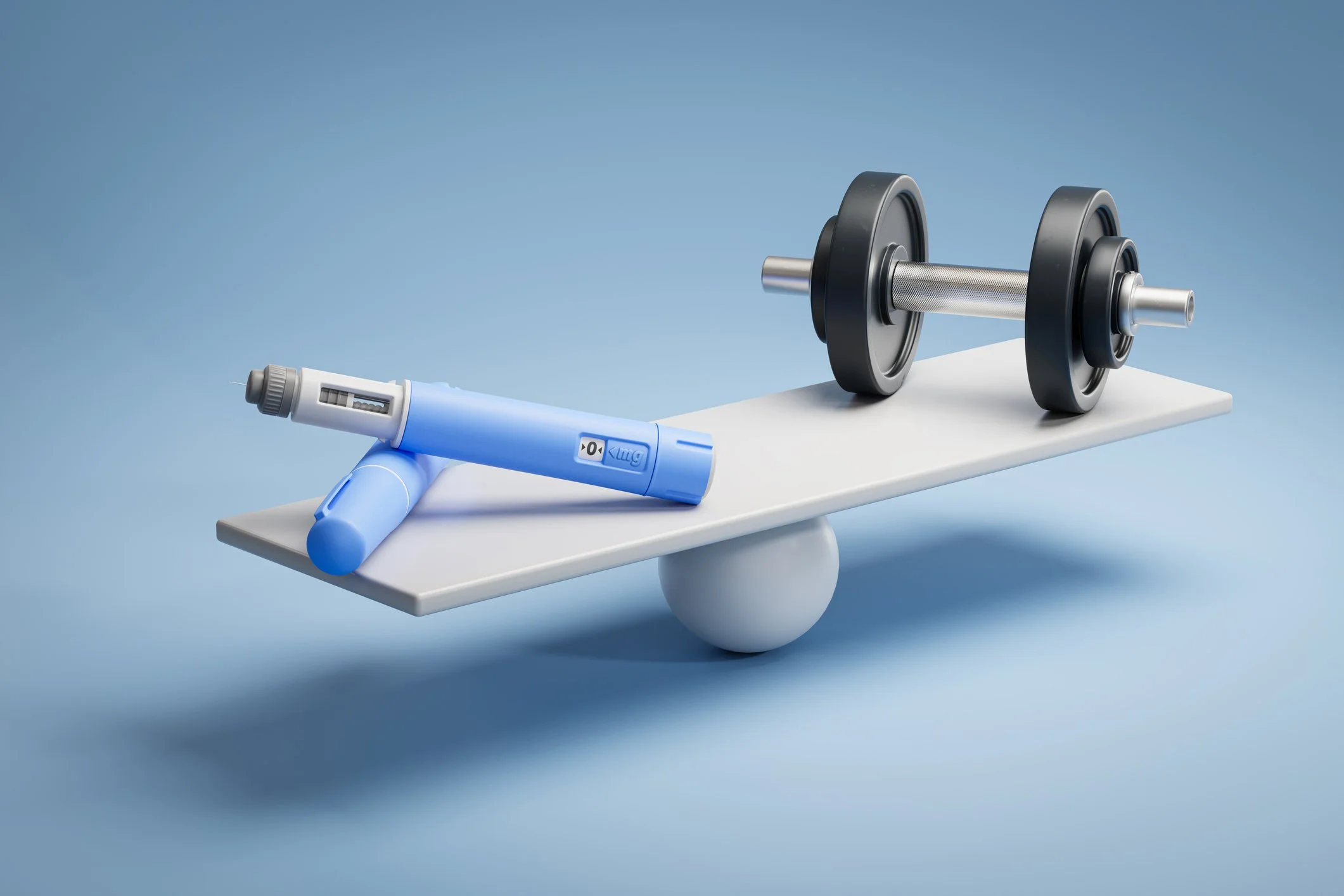
Over the past several months, about a quarter of my clients have either started or seriously considered using a GLP-1 medication for weight loss. And almost every one of them asks the same three questions: “Am I going to lose muscle?”, “What are your thoughts on GLP-1s?”, and “Is it cheating?” Before we go further, here’s where I stand: I’m not anti-GLP-1, I’m pro-long-term health, I’m pro-strength, and I’m pro-informed decisions. Medications are tools — they are not a character flaw, laziness, weakness, nor a reason to shame someone. As a personal trainer and nutrition coach (who doesn’t sell or prescribe GLP-1s), I am writing this article because now more than ever, people need health coaches. My job isn’t to push or reject any medication, nor is it any personal trainer’s job, as it is outside their scope of practice. My job is to help you build muscle, lose fat, protect your metabolism, and create a sustainable plan for you. In this article, we will discuss what GLP-1 medications do, answer the above-mentioned questions, and share why GLP-1 drugs are not the “easy way out”.
What GLP-1 Medications Do
Glucagon-like peptide-1 receptor agonists, also known as GLP-1s, are medications originally developed to improve blood sugar regulation. GLP-1 medications that you might hear about are semaglutides (Ozempic, Wegovy, Rebelsus) and tirzepatides (Mounjaro, Zepbound). One of their major effects is appetite suppression and improved satiety. For many individuals, such medications can also:
Reduce food noise
Improve glycemic control (ability to reduce A1C)
Support meaningful weight loss (leading to weight loss of up to 25% of body weight for those who struggle to lose weight through lifestyle changes only)
Improve certain cardiometabolic markers: improved cholesterol, triglycerides, etc
Reduces sleep apnea (this is particularly with medications like Tirzepatide, aka Zepbound)
Emerging research is exploring potential benefits related to cognitive health (for example, its effects on Alzheimer’s Disease), inflammation, and metabolic markers (for example, its impact on testosterone)
For someone who has struggled with obesity, insulin resistance, or chronic overeating, this can feel like relief for the first time in years. That experience is real — and it deserves acknowledgment. For some of you reading this, you may feel like someone is giving up or not trying hard enough by starting a GLP-1. It’s not! In addition, this is just like going on medication for anything else. Would you scoff at someone who took Adderall for their ADHD or any other medication for their high blood pressure, depression, etc, if they purchased contacts and glasses for their poor vision, or tell someone they’re taking the easy way out if they go on chemo for their cancer? You wouldn’t. Would you tell someone they are cheating for reading a textbook that taught you decades of knowledge in one book, versus them learning it on their own? This analogy is similar, as many feel like GLP-1s are cheating because you miss out on the hardships and habits created along the way. One will still go through hardships and will have to learn habits to still achieve their goal, especially upon going off such medications. However, just as technology and knowledge are advancing exponentially, so too is health.
It is also important to know and remember that obesity is recognized as a chronic disease. In addition, telling someone to just “try harder” after they’ve put in the work only encourages them to give up. Especially when they were already putting in more work and doing so consistently than most people I know. Lastly, fat loss is much harder for many outside the “eat less, move more” paradigm, as their genetics, physiology, social, cultural, behavioral, and/or environmental factors work against them. We live in a society built for convenience, with cheap, highly palatable, energy-dense foods and countless conveniences that reduce our need to be physically active. Therefore, behavior change alone isn’t always enough. Now, it’s also worth noting that GLP-1 medications are increasingly being studied and discussed in broader metabolic health conversations — not just weight loss. Personal trainers, nutrition coaches, and other healthy individuals are microdosing with GLP-1s to improve their blood work, optimize their health, and feel better.
Of all the benefits shared at this time, the main concern that arises for many physicians, researchers, and others is: what is the risk-to-benefit ratio for those microdosing GLP-1’s when there is an absence of an actual medical condition? However, for many who are obese, have cardiovascular disease, or don’t want to end up on blood pressure medication, the risk is worth it — and most physicians would agree so long as you are having regular blood work to monitor your overall health over time.
The Muscle Loss Concern
Rapid weight loss, regardless of method (GLP-1s, caloric deficit through nutrition and/or exercise, etc), often results in some degree of lean mass loss. But it’s important to understand why. Muscle loss during weight loss typically occurs when:
Caloric intake drops significantly
Protein intake is inadequate
Resistance training is absent
Weight is lost too quickly
Mechanical tension on the muscles decreases
This is not unique to GLP-1 medications; it’s physiology. When the body is in a large deficit and not given a reason to keep muscle, it will reduce lean tissue along with fat. In addition, the literature shows that significant and rapid weight loss is associated with poorer bone density and health outcomes in older individuals. If we can create a slow calorie deficit while performing strength training and consuming adequate protein, muscle loss should not occur.
What I’m Seeing in My Clients
In my own coaching practice, I’ve observed something important. Clients who use GLP-1 medications and strength train consistently, prioritize adequate protein intake, avoid extreme calorie restriction, and monitor performance markers are maintaining — and, in many cases, increasing — their strength. Strength gains don't happen in the absence of muscle preservation, though that doesn’t mean muscle loss can’t occur. It means it is not inevitable. The difference isn’t just the medication; it's the structure.
Another thing I’m noticing is that while individuals should try to consciously consume healthy foods, there are some foods you should be mindful of, as they can increase the likelihood of nausea, indigestion, and other gastrointestinal discomfort. Individuals on GLP-1 medications often experience gastrointestinal discomfort, which can be triggered by certain foods. Here are some foods that you should avoid, limit, or be aware of:
Fried Foods: Heavily fried foods can sit in the stomach longer, which can lead to nausea or indigestion
High-Sugar Foods & Drinks: Foods and drinks high in sugar can cause blood sugar spikes and crashes, which lead to discomfort
Greasy or fatty meats: Processed meats are tough to digest and packed with sodium and unhealthy fats, which can worsen nausea
Alcohol: Beer, wine, and cocktails can worsen nausea, which increases dehydration risk, and affect blood sugar control
Why the Rate of Weight Loss Matters
When weight drops rapidly, several things can happen:
Energy expenditure decreases
Recovery capacity drops
Fatigue increases
Lean mass becomes more vulnerable
A slower, more controlled rate of fat loss allows the body to adapt while preserving muscle tissue. This is especially important for adults over 40, where maintaining muscle mass becomes increasingly critical for metabolic health, joint support, and long-term independence.
How to Protect Muscle While Using GLP-1 Medications
If someone chooses to use a GLP-1 medication, I emphasize the following non-negotiables:
1. Strength train 2–4 times per week: Mechanical tension tells the body to preserve muscle.
2. Prioritize protein intake: Protein provides the building blocks necessary for muscle repair and retention. Ultimately, the goal is .7 to 1 gram per body pound.
3. Avoid aggressive calorie restriction beyond what the medication already creates: Stacking extreme deficits increases lean mass risk. Ideally, and depending on the individual, I like to see a caloric deficit of 250-750 kcals per day, as this is most doable and sustainable for most individuals looking to reduce body fat.
4. Track strength, not just scale weight: If performance is improving or maintained, muscle loss risk is lower.
5. Work closely with a qualified healthcare provider: Medication decisions should always be medically supervised.
GLP-1 medications can create an opportunity for fat loss while preserving muscle through their effects on stimulus and fuel.
Final Thoughts
This does not need to be a fear-based conversation but a structure-based conversation, as medication may assist with appetite and metabolic regulation. In addition, remember that total calorie intake drives weight change, macronutrient distribution influences body composition, and micronutrient adequacy supports overall health and recovery. Therefore, strength training and ensuring you consume plenty of protein will determine the kind of body you keep. If you’re navigating this decision, the goal isn’t to panic but to have a conversation with your physician and make a plan together.