Why Your Hamstrings Always Feel Tight (Even Though You Stretch Them)
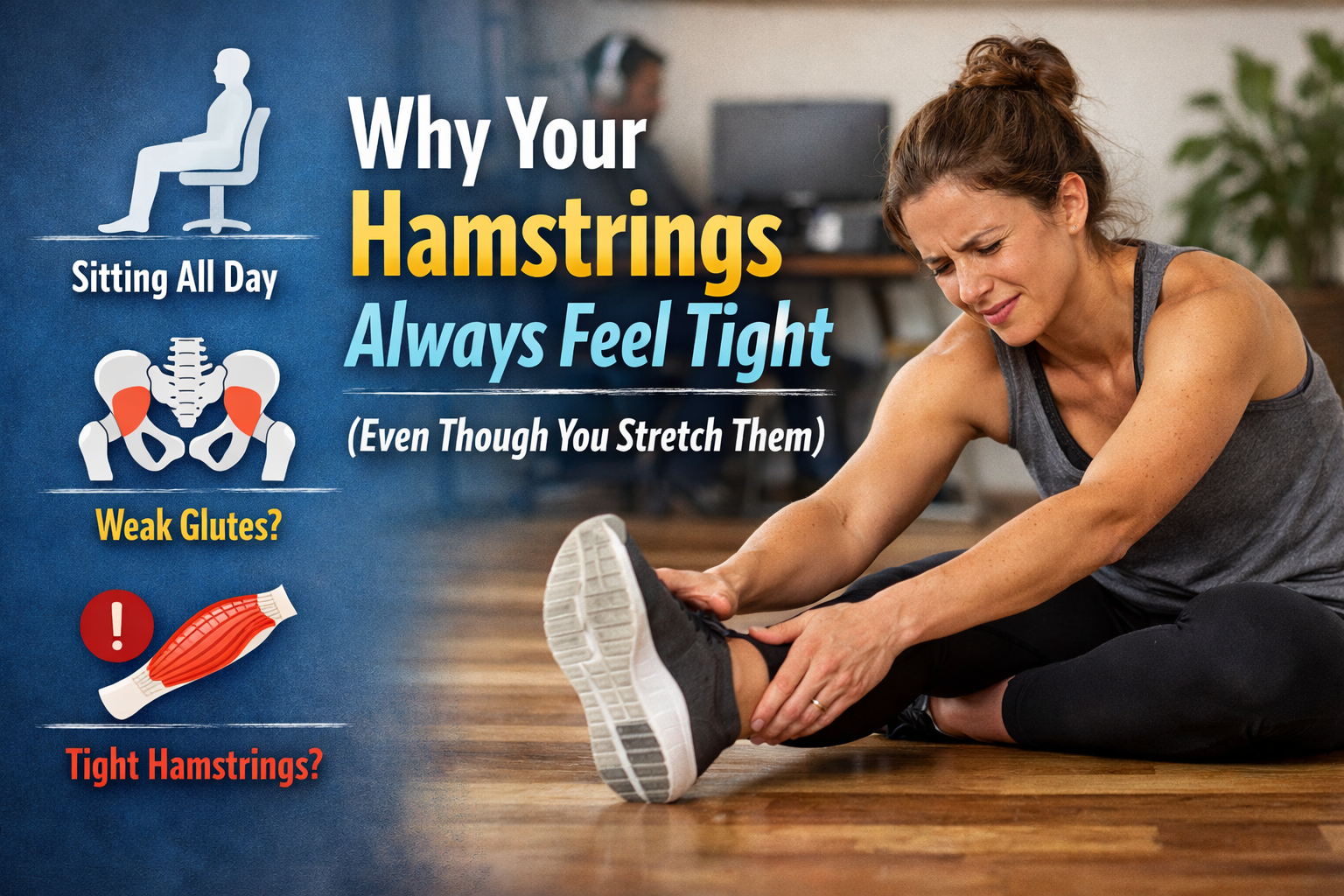
If you’ve ever told me, “My hamstrings are always tight,” you’re definitely not alone. In fact, it’s one of the most common things I hear from clients—especially those who work at a desk most of the day. The typical story goes something like this: “I stretch them every day. I do yoga once or twice a week. I lean forward and try to touch my toes. But they still feel tight.” And on the surface, that sounds confusing. If tight muscles are the problem, stretching should fix it…right?
Well, not always.
In many cases, the hamstrings aren’t actually the root of the issue. What people interpret as “tight hamstrings” is often a signal from the body that something else isn’t doing its job well. Let’s unpack what’s really going on.
The Desk Job Reality: What Sitting Does to the Body
If you sit for work—whether that’s in an office, working from home, or driving for long stretches—your body spends hours in a hip-flexed position.
In this posture:
Your hips stay bent
Your glutes are relatively inactive
Your hamstrings remain shortened
Your core isn’t doing much stabilization
Over time, the body adapts to this position. But here’s the important part most people miss: The sensation of tightness isn’t always about muscle length. Often, it’s about how the nervous system is managing stability. Your body may be keeping the hamstrings “on guard.”
Tight vs. Protective: The Nervous System’s Role
Your hamstrings do more than just bend the knee or help you touch your toes. They play an important role in stabilizing the pelvis and supporting the hips when other muscles aren’t contributing enough. If the glutes aren’t producing force effectively—something that commonly happens with prolonged sitting—the hamstrings may step in to help. When that happens, the brain may maintain a certain level of tension in those muscles. Not because they are too short but because they’re working overtime to keep the system stable. Stretching might provide temporary relief, but if the underlying system hasn’t changed, the tight feeling returns quickly.
Why Stretching Often Doesn’t Fix It
Stretching can absolutely be beneficial. This isn’t me saying that stretching doesn’t help. But stretching alone doesn’t address the common drivers behind persistent hamstring tightness. If you stretch a muscle that your nervous system believes is needed for stability, the body often responds by re-tightening it shortly afterward. Think of it like loosening a bolt that’s holding a structure together. The system wants that support, so it tightens it back up.
This is why someone might:
Stretch their hamstrings in the morning
Go to yoga in the evening
And still feel tight the next day
The real solution usually requires addressing movement patterns and muscle balance, not just flexibility.
The Glute Connection
One of the biggest contributors to hamstring tightness in desk workers is underactive glutes. The glutes are designed to be the primary hip extensors when we walk, climb stairs, and stand up from chairs. But if they’ve been relatively quiet all day due to sitting, the hamstrings often pick up some of that workload. This doesn’t mean the hamstrings are weak or problematic. It just means the system is out of balance. Helping the glutes contribute again often dramatically reduces perceived hamstring tightness.
Some examples of movements that help reintroduce glute engagement include(I’ve provided links if you’re unsure what they are):
When these muscles begin sharing the workload again, the hamstrings no longer need to maintain constant tension.
Movement Throughout the Day Matters More Than One Big Stretch
Another piece of the puzzle is how often we move throughout the day. Many adults spend long stretches sitting without interruption, which can contribute to stiffness or pain not just in the hamstrings, but also in the hips, lower back, and calves. One strategy I often recommend to clients is breaking up long periods of sitting with short movement breaks. You don’t need a full workout.
Sometimes it’s as simple as:
Walking for a few minutes
Standing while taking a call
Performing a few bodyweight squats
Doing light hip mobility drills
Even something like the Pomodoro method—working for about 25, 45, or even 60 minutes and then taking a brief movement break—can be helpful for both productivity and physical comfort. The body tends to respond better to frequent, gentle movement than to a single big stretching session after sitting all day.
Don’t Forget the Core
Another contributor to persistent hamstring tightness is core stability. If the muscles that stabilize the pelvis and spine aren’t contributing effectively, the hamstrings may again step in to help. This is especially common in people who experience occasional low back discomfort. Core training doesn’t have to mean endless crunches. Instead, focusing on anti-movement exercises can be incredibly helpful.
These are exercises like (I’ve provided links if you’re unsure what they are):
Planks (I prefer the Russian Kettlebell Competition (RKC) Plank)
Pallof presses: You perform from a tall-kneeling, ½ kneeling, or standing position
These exercises train the body to maintain trunk stability, so the hamstrings don’t have to compensate.
When Stretching Does Help
Stretching still has value. But it tends to be most effective when combined with:
Strength training
Movement variability
Improved posture throughout the day
In other words, stretching works best when it’s part of a complete movement strategy, not the only tool being used.
A Simple Reset Strategy
If you frequently feel hamstring tightness, try this sequence before stretching:
Activate the glutes
10–15 glute bridges
Add light core engagement
8–10 dead bugs per side. Be sure the core is braced throughout the movement (i.e., brace the core as if about to be punched in the stomach) vs just flailing the arms and legs.
Perform a hinge pattern
Light kettlebell or bodyweight Romanian deadlift. Sit your hips back (i.e., as if you were closing a car door with your hips) while maintaining equal pressure distribution across the feet.
Then stretch if needed
Many people find their hamstrings already feel looser before they even get to the stretch.
The Bigger Picture
Your body is incredibly intelligent. INCREDIBLY INTELLIGENT! As a matter of fact, in a fast-paced, easily accessible world, I always say that the human body is the one thing that reminds us that patience is key, as it needs time to do what it needs. When something feels tight, it’s often not just about more stretching—it’s about better balance across the system.
For many busy professionals who spend large parts of their day sitting, the key solutions tend to be surprisingly simple:
Move more frequently
Strengthen the hips and core
Reintroduce the glutes into daily movement
Use stretching as a complement, not the only strategy
Once those pieces come together, the hamstrings (hips and/or low back) often stop complaining.
Final Thoughts
If you’re someone who constantly stretches your hamstrings but still feels tightness day after day, it might be time to zoom out and look at the bigger picture. Your body may not be asking for more flexibility—it may be asking for better movement patterns and stronger support from the surrounding muscles. That’s where personalized coaching can make a big difference. If the above-mentioned is something you’ve been doing consistently and is an ongoing, persistent issue, please seek treatment from a physical therapist or chiropractor.
Work With Me
At Wellness with Joshua, I help busy professionals build stronger, more resilient bodies through personalized strength training, movement coaching, and sustainable health strategies. Whether you’re dealing with persistent tightness, trying to stay active with a desk job, or simply want to move better for the long run, I’d love to help. Learn more by filling out a consultation form and scheduling an appointment at www.wellnesswithjoshua.com. Because your best self is waiting.